How to Write Product Descriptions Using AI: A Complete Guide for 2026
The practical guide to using AI writing tools to produce product descriptions that sell — faster and at scale
This article contains affiliate links. If you purchase through these links, we may earn a commission at no extra cost to you. This does not affect our assessment — we only recommend tools we genuinely believe deliver value.
Learning how to write product descriptions using AI is one of the most immediately valuable skills any ecommerce business owner can develop in 2026. Product descriptions are one of those writing tasks that is simultaneously high-volume, high-stakes, and highly repetitive — a combination that makes it an ideal candidate for AI assistance. Writing unique, persuasive descriptions for dozens or hundreds of products manually is a task that most small businesses simply cannot complete to a consistently high standard.
AI writing tools change this equation dramatically. What used to take hours of manual writing per product can be reduced to minutes — and the quality, when the AI is briefed correctly and the output is edited properly, is consistently professional. The result is product pages that are more persuasive, more SEO-friendly, and more consistent in tone than most small businesses can achieve writing manually under time pressure.
This guide covers exactly how to write product descriptions using AI — the principles that make descriptions convert, the step-by-step workflow using Rytr, and the editing process that turns AI drafts into descriptions that genuinely sell.
What Makes a Product Description Actually Convert
Before using any AI tool for product descriptions, understanding what separates converting descriptions from non-converting ones is essential. AI tools follow the brief you give them — if your brief does not reflect these principles, the output will not either.
Benefits over features. The most common product description mistake is listing features without translating them into benefits. A jacket that is ‘made from 600-fill goose down’ is a feature. ‘Keeps you warm in temperatures down to -10°C without the bulk of heavier coats’ is a benefit. Buyers make purchase decisions based on how a product improves their life — not on technical specifications. Always ensure your AI brief includes the benefit of each feature, not just the feature itself.
Specific over vague. ‘High quality materials’ tells the reader nothing. ‘Aircraft-grade aluminium that is lighter than steel but twice as strong’ tells them something specific and credible. Specificity builds trust and earns attention. The more specific your AI brief, the more specific and credible the output.
Speak to one reader. Product descriptions perform best when they speak directly to a specific type of customer in language that resonates with that customer’s situation. ‘Perfect for the home baker who wants professional results without professional equipment’ is more compelling than ‘suitable for home and professional use.’ Brief your AI tool with a clear picture of the specific customer you are writing for.
SEO without stuffing. Product descriptions need to include relevant keywords naturally — the terms customers actually use when searching for products like yours. AI tools can help you incorporate these naturally, but always specify your target keywords in the brief so the AI works toward a specific SEO goal rather than producing generic content.
How to Write Product Descriptions Using AI: Step by Step With Rytr
Step 1 — Open Rytr and Select Product Description
Go to rytr.me and log in. In the Generate tab, click the use case dropdown and scroll to find Product Description. This use case is specifically structured to produce persuasive product copy — it follows the benefit-focused framework automatically rather than producing a generic list of features.
Step 2 — Set Your Tone
Tone selection for product descriptions depends entirely on your brand and product type. Luxury products benefit from Formal or Sophisticated tones that match customer expectations. Everyday consumer products work better with Conversational or Friendly. Technical products for professional audiences work with Informative or Professional. Choosing the wrong tone produces descriptions that feel mismatched with your product — a luxury handbag described in casual language, or a professional tool described with overly enthusiastic consumer copy.
Step 3 — Write Your Product Brief
The quality of your product brief is the single biggest factor in the quality of the output. A strong product description brief includes:
- Product name and category
- Three to five key features — stated as features, not benefits
- The primary benefit of each feature — what it means for the customer
- The target customer — who specifically buys this product and why
- Any target keywords you want included naturally
- The tone and any brand voice notes
Example strong brief: ‘Ceramic non-stick frying pan. Features: ceramic coating, stay-cool handle, oven-safe to 200°C, dishwasher-safe. Benefits: food releases without oil or butter, handle stays cool on all hob types, versatile for stovetop and oven cooking, easy cleanup. Target customer: health-conscious home cooks who want to reduce oil usage without sacrificing cooking performance. Keywords: ceramic frying pan, non-stick, oven-safe frying pan.’
Step 4 — Generate and Select
Generate two variations and read both. Product description variations from Rytr often differ significantly in approach — one might lead with the lifestyle benefit, another with the technical specification. Choose the one that better matches your brand voice and the primary motivation of your target customer. Sometimes neither is perfect but combining elements from both produces the strongest result.
Step 5 — Edit for Accuracy and Brand Voice
This step is non-negotiable for product descriptions. Always verify that every factual claim in the AI-generated description is accurate — dimensions, materials, certifications, compatibility, and any performance claims. AI tools can generate plausible-sounding but inaccurate product claims, particularly for technical specifications. Never publish a product description without verifying the factual content.
Beyond accuracy, edit for brand voice. Add any brand-specific language, remove any phrases that feel off-brand, and ensure the description feels consistent with the rest of your product range. A few minutes of editing per description produces significantly better results than publishing AI output unedited.
Scaling Product Description Writing With AI
Creating a Brief Template
The most time-efficient approach to high-volume product description writing is creating a standardised brief template that you complete for each product rather than writing each brief from scratch. A template that captures all the necessary information — features, benefits, target customer, keywords — in a consistent format allows you to complete the brief quickly and paste it into Rytr without having to think about what information to include each time.
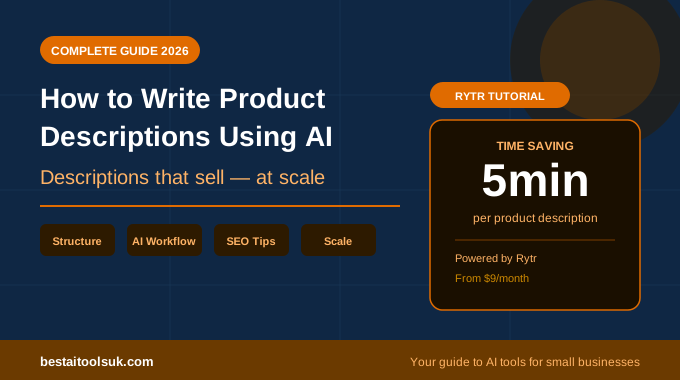
Once you have this template refined, generating a product description takes approximately five minutes per product — one to two minutes completing the brief, ten seconds for Rytr to generate, and two to three minutes editing. For a store with one hundred products, that is approximately eight hours of work rather than the forty to sixty hours manual writing would require.
Maintaining Consistency Across Large Catalogues
One of the biggest challenges in product description writing for large catalogues is maintaining consistent tone, length, and style across hundreds of descriptions. Inconsistent descriptions feel unprofessional and undermine brand trust. AI tools address this by following the same structural framework and tone setting every time — the descriptions are as consistent as the briefs you provide.
Create a style guide for your product descriptions — specifying preferred length, tone, the order in which information is presented, and any brand-specific phrases to include or avoid — and reference this guide when briefing Rytr and editing the output. This ensures consistency even when descriptions are written across multiple sessions.
Product Description SEO: Using AI to Rank as Well as Convert
Product descriptions serve two audiences: the customer who reads them and Google which indexes them. A great product description that does not rank for relevant search terms fails to attract organic traffic. A description that ranks but does not convert fails to generate sales. The goal is descriptions that do both.
Frase is the best tool for understanding what keywords your product pages need to rank for and how to incorporate them. At $12.66 per month, Frase analyses what is currently ranking for your target product keywords and tells you what your descriptions need to include to compete. Combining Frase for keyword intelligence with Rytr for persuasive copy production gives you descriptions that are both conversion-optimised and SEO-friendly. See our guide on how to use Frase SEO to rank on Google for the complete workflow.
Common AI Product Description Mistakes to Avoid
- Publishing without fact-checking — AI generates plausible but sometimes inaccurate specifications
- Generic briefs that produce generic descriptions — the quality of output matches the quality of the brief
- Skipping the edit — AI output always needs human polish before it is genuinely ready to publish
- Same brief format for all product types — a clothing description needs different information than a technical equipment description
- Forgetting the target customer — descriptions that try to appeal to everyone appeal to no one
⭐ Ready to write product descriptions that sell — at scale? Rytr’s Product Description use case generates persuasive copy from your product brief in seconds. Try Rytr free here → rytr.me For SEO-optimised product pages that rank on Google: Try Frase here → frase.io
Published on bestaitoolsuk.com — Your trusted guide to AI tools for small businesses