Best AI Writing Tools for Architects in 2026
The practical guide to AI writing tools that save architects time on project proposals, planning statements, client communications and business development content
This article contains affiliate links. If you purchase through these links, we may earn a commission at no extra cost to you. This does not affect our assessment — we only recommend tools we genuinely believe deliver value.
Best AI writing tools for architects are proving genuinely valuable for practices of all sizes that need to produce high volumes of professional written content alongside their core design work. Architecture is a profession that generates a significant amount of written output — project proposals, planning application statements, client briefs, fee proposals, website project descriptions, award submissions, and business development content — all of which requires professional standards of writing but does not necessarily require an architect’s design expertise to draft. AI writing tools handle this category of work efficiently, freeing up architects to focus on the design work that genuinely requires their skills.
The honest context is that AI writing tools are a drafting and production aid rather than a replacement for professional judgement. Planning statements, in particular, require accurate technical and policy knowledge that must be provided and verified by the architect — AI tools can accelerate the drafting process but the content must be thoroughly reviewed before submission. For everyday client communications, website content, and business development writing, AI tools deliver immediate and reliable time savings with minimal risk. See our guide to the best AI tools for small business marketing for how these tools fit into a broader marketing and communications strategy.
Best AI Writing Tools for Architects: Quick Comparison
| Tool | Best For | Starting Price | Free Plan |
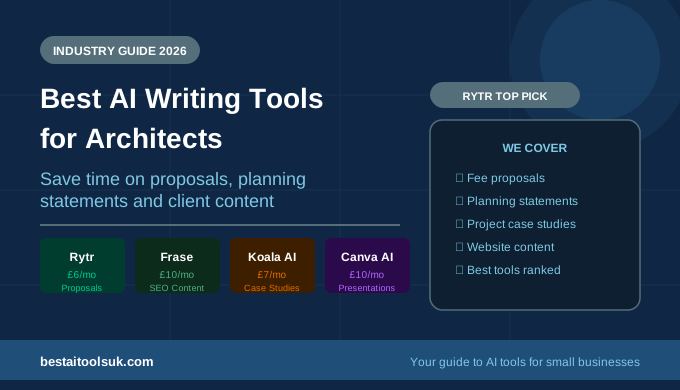
| Rytr | Project proposals, client emails, website copy | £6/month | Yes — 10,000 chars/month |
| Frase | Architecture blog content, SEO articles | £10/month | No — 5-day trial |
| Koala AI | Planning statements, high-volume content | £7/month | Trial credits |
| Canva AI | Project presentations, social media visuals | Free / £10/month | Yes |
| ChatGPT | Planning documentation support, research | Free / £16/month | Yes |
Why Architects Are Using AI Writing Tools in 2026
The writing demands on architectural practices have expanded significantly beyond the core technical documentation of a decade ago. Winning new work increasingly depends on a strong digital presence — a well-written website, regular project case studies, LinkedIn content, and award submissions. Client communication expectations have risen. And planning applications require increasingly detailed supporting statements that explain design rationale in accessible language for planning committees.
AI writing tools address these demands by dramatically reducing the time required to produce professional written content across all of these categories. A practice principal who previously spent two hours writing a project case study for the website can produce a strong first draft in fifteen minutes with Rytr. A practice that previously published one blog post per quarter can maintain a monthly publishing schedule with Frase or Koala AI at the same time investment. For the most cost-effective approach to building this capability, see our guide to the best free AI tools for small businesses.
The Best AI Writing Tools for Architects
1. Rytr — Best for Project Proposals and Client Communications
Rytr is the strongest all-round AI writing tool for architects who need to produce a variety of professional written content quickly. The proposal and business pitch templates produce well-structured fee proposals and project briefs from a description of the project scope — covering practice credentials, approach, deliverables, and timeline in a professional format that requires only factual personalisation before sending. The email templates handle client communications, meeting follow-ups, and new enquiry responses with the professional tone that architecture clients expect.
At six pounds per month for the Saver plan — with a free plan offering ten thousand characters per month to test the tool — Rytr is the most accessible entry point for small and independent practices. The website copy template is particularly useful for practices that need to refresh their project descriptions, about page, or service descriptions without the cost of a copywriter. See our full Rytr review for the complete breakdown of templates and use cases.
Best for: Fee proposals, project briefs, client emails, website project descriptions, award submission narratives, LinkedIn posts.
Starting price: Free plan available — Saver plan from £6/month. Try Rytr free here.
2. Frase — Best for Architecture Content Marketing
Frase is the strongest AI tool for architectural practices that use content marketing to attract clients through organic search. Articles explaining the planning process, guides to working with an architect, home extension design advice, and commercial fit-out considerations are all high-value content types that attract prospective clients searching Google before appointing a practice. Frase’s SERP analysis identifies exactly what these articles need to cover to rank for competitive architecture and construction keywords.
For practices that have invested in a website but are not generating consistent enquiries from it, regular well-optimised content is often the missing ingredient. A well-ranked article on loft conversion planning permission, for example, can generate enquiries from exactly the type of residential client many practices are targeting — consistently, for months or years after publication. See our full Frase review and our guide on how to use Frase for SEO for the complete workflow.
Best for: Planning guides for clients, design process explainers, extension and renovation advice articles, SEO-driven new client enquiries.
Starting price: 5-day free trial — Solo plan from £10/month. Try Frase here.
3. Koala AI — Best for High-Volume Content Production
Koala AI is the strongest tool for architectural practices or marketing managers who need to produce large volumes of content quickly — project case studies, planning guides, design trend articles, and sector-specific content for practices targeting particular markets. The five-minute article generation, informed by real-time web browsing for current planning policy, building regulation updates, and industry developments, produces more current and accurate content than tools relying solely on training data.
For practices targeting specific sectors — residential, commercial, education, healthcare — Koala AI can rapidly produce sector-specific content that demonstrates expertise and attracts the right type of client enquiry. All content should be reviewed by the practice before publication to ensure technical accuracy and consistency with the practice’s design philosophy. See our full Koala AI review for the complete assessment.
Best for: Project case studies, sector-specific content, planning and design guides, high-volume content for practices with active marketing programmes.
Starting price: Trial credits available — plans from £7/month. Try Koala AI here
4. Canva AI — Best for Project Presentations and Social Media
Canva AI is the strongest tool for architectural practices that need to produce professional visual presentations and social media content without a dedicated marketing function. The AI image generation and design tools allow practices to produce polished project update slides, social media graphics showcasing completed projects, and branded presentation templates that maintain a consistent visual identity across all client and public-facing materials. The Brand Kit feature stores practice colours, fonts, and logo for instant application across any design.
For practices that present to clients, planning committees, or community groups regularly, Canva Pro’s presentation tools significantly reduce the time required to produce professional slide decks. At ten pounds per month, the value relative to the time saved on presentation production alone is strong for most practices. See our Canva AI review for the full breakdown of features.
Best for: Client presentation decks, planning committee presentations, social media project showcases, branded marketing materials.
Starting price: Free plan available — Pro from £10/month.
5. ChatGPT — Best for Planning Documentation Support
ChatGPT is the most flexible tool for architects who need support with the research and drafting phases of planning documentation. Asking ChatGPT to summarise relevant planning policy for a specific project type, to generate a list of design principles that might support a planning argument, or to produce a first draft of a design and access statement introduction — these are tasks where ChatGPT’s conversational flexibility makes it genuinely useful as a thinking partner alongside the architect’s technical knowledge.
The critical caveat is that all planning documentation must be thoroughly verified and signed off by the architect — ChatGPT can produce plausible-sounding but inaccurate planning policy references, and any errors in submitted planning documentation can have serious consequences. Used as a drafting accelerator rather than an authoritative source, ChatGPT adds genuine value to the documentation process. The free plan is sufficient for most use cases. See our comparison of ChatGPT vs Frase for a direct breakdown of which tool suits which writing task.
Best for: Design and access statement drafting support, planning policy research, design rationale articulation, flexible ad hoc writing assistance.
Starting price: Free plan available — ChatGPT Plus from £16/month.
How Architects Are Using AI Writing Tools in Practice
Fee Proposals and New Business Writing
The highest-impact use case for AI writing tools in architectural practice is new business writing — fee proposals, practice capability statements, and responses to briefs. These documents follow consistent structures but require significant time investment to produce well. Rytr’s proposal templates produce professional first drafts that the practice can personalise with specific project details, credentials, and approach statements — reducing a two-hour task to a thirty-minute one without sacrificing the professional quality that wins work. See our guide on how to write a business proposal for the approach that works best for professional services practices.
Project Case Studies and Website Content
Architectural practices that update their website with regular project case studies consistently attract better enquiries than those with static portfolios. AI writing tools make this content achievable without a copywriter — a completed project can be documented as a compelling case study in under twenty minutes using Rytr, with the architect providing the project specifics and the AI handling the professional narrative structure.
LinkedIn and Social Media Presence
LinkedIn has become an important business development channel for architectural practices, with regular content about completed projects, design thinking, and planning insights generating awareness among potential clients and referral partners. AI writing tools allow practice principals and associates to maintain a consistent posting schedule without the time investment that previously made it impractical alongside a full project workload. See our guide on how to use AI to write social media posts for the workflow that works best for professional services social media content.
The Honest Verdict
The best AI writing tools for architects in 2026 are Rytr for proposals and client communications, Frase for content marketing and SEO, and Canva AI for presentations and visual content. Together these tools cover the full range of written and visual content most architectural practices produce, at a combined cost of under thirty pounds per month.
The starting point for most practices is Rytr — the free plan is risk-free and the proposal and email templates deliver immediate time savings. For practices serious about generating enquiries through their website, Frase at ten pounds per month is the strongest addition. Try Rytr free here and see how much time it saves on your next fee proposal or project case study.
⭐ Try Rytr free — no credit card required: Try Rytr free here⭐ Try Frase — start producing content that ranks on Google: Try Frase here
Published on bestaitoolsuk.com — Your trusted guide to AI tools for small businesses