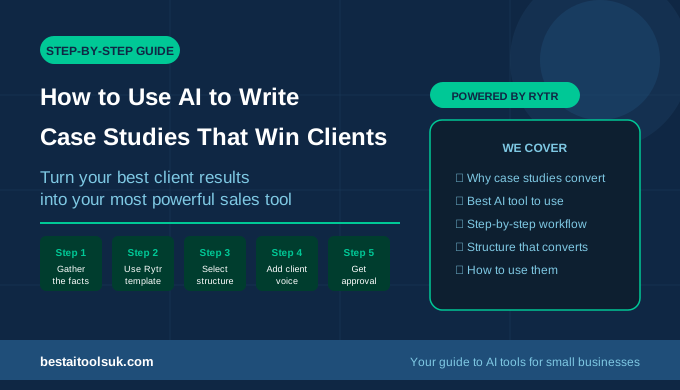
How to Use AI to Write Case Studies That Win New Clients in 2026
The practical guide to using AI writing tools to produce compelling case studies faster — so your best client results become your most powerful sales tool
This article contains affiliate links. If you purchase through these links, we may earn a commission at no extra cost to you. This does not affect our assessment — we only recommend tools we genuinely believe deliver value.
How to use AI to write case studies is one of the most underutilised applications of AI writing tools for small businesses and professional services firms. Case studies are among the most powerful sales tools available — a well-written case study that shows a specific problem, a specific solution, and a specific measurable result is more persuasive than any amount of general claims about your capabilities. The reason most businesses do not have enough good case studies is not a shortage of good client results — it is a shortage of time to translate those results into compelling written narratives. AI writing tools solve that problem directly.
The honest context is that AI writing tools are a structuring and drafting aid for case studies rather than a source of the content itself. The specific client challenge, the specific approach you took, and the specific results achieved all require your knowledge and your client’s permission to share. What AI tools provide is the professional narrative structure that transforms a set of bullet points about a project into a compelling story that prospective clients want to read. See our guide on how to save time using AI writing tools for the broader picture of where AI delivers the most value in business writing.
Why Case Studies Are Your Most Powerful Sales Tool
A well-written case study does something that no other piece of marketing content can do — it shows a prospective client exactly what working with you looks like, from their perspective. It identifies a problem they recognise, describes an approach that sounds credible, and demonstrates a result they want. When a prospective client reads a case study about a business similar to theirs achieving an outcome they are targeting, the conversion from reader to enquiry is significantly higher than from any other content type.
The businesses that close the most new clients from their website are almost always those with the strongest portfolio of case studies — not the most impressive general service descriptions or the most elaborate about pages. Yet case studies are consistently the most neglected content type because writing them from scratch feels like a significant time investment. AI tools change this equation entirely. For more on building content that converts prospective clients, see our guide to the best AI tools for small business marketing.
The Best AI Tool for Writing Case Studies
Rytr is the strongest AI writing tool for case study production. The testimonial and case study templates produce well-structured narratives from a brief description of the project — covering the client background, the challenge they faced, the approach you took, and the results achieved in a format that reads naturally and compellingly. At six pounds per month for the Saver plan — with a free plan offering ten thousand characters per month — Rytr is accessible to any business that wants to build a case study library without the cost of a professional copywriter. See our full Rytr review for the complete breakdown of Rytr’s templates beyond case studies.
For businesses that want to use case studies as part of an SEO content strategy — publishing them on their website where they can rank for search terms that prospective clients use — Frase adds the keyword research and content optimisation layer that turns a good case study into one that also generates organic traffic. See our full Frase review for how Frase’s SEO capabilities complement a case study content strategy.
How to Use AI to Write Case Studies Step by Step
Step 1 — Gather the Raw Information
Before opening any AI tool, gather the specific information that will make your case study compelling and credible. You need four things: a brief description of the client and their situation before working with you, the specific challenge or problem they were facing, the specific approach or solution you provided, and the specific results achieved — ideally with numbers, percentages, or timeframes that make the outcome concrete and verifiable.
This information gathering is the most important step. A case study is only as strong as the specifics it contains — vague inputs produce vague outputs. If you do not have specific outcome data, ask your client for it directly. Most clients are willing to share the relevant numbers when they understand you want to use them in a case study that showcases their success as much as yours.
Step 2 — Open Rytr and Select the Case Study Template
In Rytr, select the case study or testimonial use case from the template library. Enter the information from Step 1 — client background, challenge, approach, and results — as specifically as possible. The more concrete detail you provide, particularly around the results, the more compelling the AI output will be. A result described as ‘increased website traffic’ produces a weaker case study than ‘increased organic website traffic by sixty-three percent in four months’. See our guide on how to use Rytr to write emails faster for the approach to using Rytr’s templates that transfers directly to case study production.
Step 3 — Generate and Select the Strongest Structure
Rytr generates multiple structural approaches to your case study from the same inputs. Always generate at least three variations and compare them. The strongest variation is usually the one that leads with the client’s problem most compellingly — because prospective clients who face the same problem will immediately recognise it and read further. Select the structure that frames the challenge most specifically and the result most concretely.
Step 4 — Add Specificity and Client Voice
The AI-generated draft provides the structure and professional language — but the case study becomes genuinely compelling when you add two things that AI cannot provide: specific details that only you know about the project, and the client’s own voice. If your client has provided a quote about the results or the working relationship, add it to the case study. Direct client quotes are the single most persuasive element of any case study, because they remove the self-promotional quality that even a well-written case study has when only the business speaks.
Step 5 — Get Client Approval Before Publishing
Every case study that names a client or describes their business in identifying detail requires the client’s explicit approval before publication. Send the draft to the client with a brief explanation of where it will be published and how it will be used. Most clients are happy to approve case studies — particularly when the results are impressive — but the approval must be obtained. Some clients will request anonymisation, which is also workable — an anonymous case study with specific outcome data is still significantly more persuasive than a general service description.
Case Study Structure That Converts
The Headline — Lead With the Result
The most effective case study headlines lead with the result rather than the client name or the service provided. ‘How a Manchester accountancy firm reduced its monthly reporting time by forty percent’ is more compelling than ‘Case Study: Smith & Partners Accountants’. The result-first headline immediately communicates the value to a prospective client who faces a similar challenge. For more on writing headlines that convert, see our guide on how to write product descriptions using AI for the headline principles that transfer directly to case study writing.
The Challenge Section — Make It Relatable
The challenge section should describe the client’s situation in language that prospective clients with similar challenges will immediately recognise. Avoid jargon specific to the client’s industry if your prospective clients come from a range of sectors. Focus on the business impact of the challenge — the time wasted, the revenue lost, the opportunity missed — rather than the technical details of the problem. Prospective clients need to see themselves in the challenge before they will engage with the solution.
The Approach Section — Show Your Thinking
The approach section is where prospective clients evaluate whether your method makes sense to them. It should explain what you did and why — the reasoning behind your approach is often more persuasive than a description of the activities themselves. Clients buy thinking, not just execution, and the approach section is where you demonstrate the quality of your thinking.
The Results Section — Be Specific
The results section is the most important part of the case study and should be the most specific. Vague results — ‘significantly improved’, ‘much better performance’, ‘noticeably increased’ — undermine credibility rather than building it. Specific results — ‘forty-seven percent reduction in processing time’, ‘twelve new clients in the first quarter’, ‘website enquiries increased from three to eighteen per month’ — are immediately credible and immediately compelling. See our guide on how to write a business proposal for the evidence-presentation principles that apply equally to case studies.
How to Use Case Studies Across Your Business
A well-written case study is one of the most versatile pieces of content a business can produce. It can be published on your website as a standalone page, shared as a PDF in proposals and sales conversations, broken into social media posts highlighting the key results, adapted into a blog post discussing the approach in more depth, and included in email newsletters as evidence of recent client results. For the most effective email approach, see our guide on how to use AI writing tools to grow your email list for how case studies fit into an email content strategy.
For businesses that want to use case studies to attract inbound enquiries through Google, publishing them as SEO-optimised website pages — targeting search terms that prospective clients use when looking for the kind of results you have achieved — is one of the most commercially effective content strategies available. Frase’s keyword research and content optimisation tools make this approach achievable without a dedicated SEO function. See our guide on how to use Frase for SEO for the workflow that works best for case study SEO.
The Honest Verdict
AI writing tools — specifically Rytr — genuinely transform case study production for small businesses that have good client results but lack the time to document them well. The structured output provides the professional narrative framework, the clear section structure, and the business-appropriate language that makes a case study read like it was written by a professional copywriter rather than assembled from notes.
The businesses that benefit most from AI case study tools are those who invest the time in Step 1 — gathering the specific information that makes the case study genuinely compelling — and then use AI to handle the structural and language work that turns those specifics into a readable narrative. That combination consistently produces case studies that win new clients. Try Rytr free here and produce your first AI-assisted case study today — start with your most impressive recent client result and see how quickly a compelling case study comes together.
⭐ Try Rytr free — write better case studies in minutes: Try Rytr free here⭐ Try Frase — produce content that ranks and brings clients to you: Try Frase here
Published on bestaitoolsuk.com — Your trusted guide to AI tools for small businesses